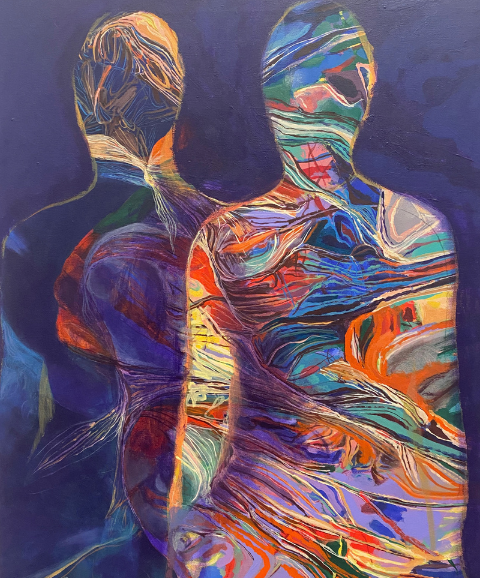
Reflections on Satta Hashem: A World of Colour and Emotion
A body of work saturated in colour, as rich as the heritage that underpins it.
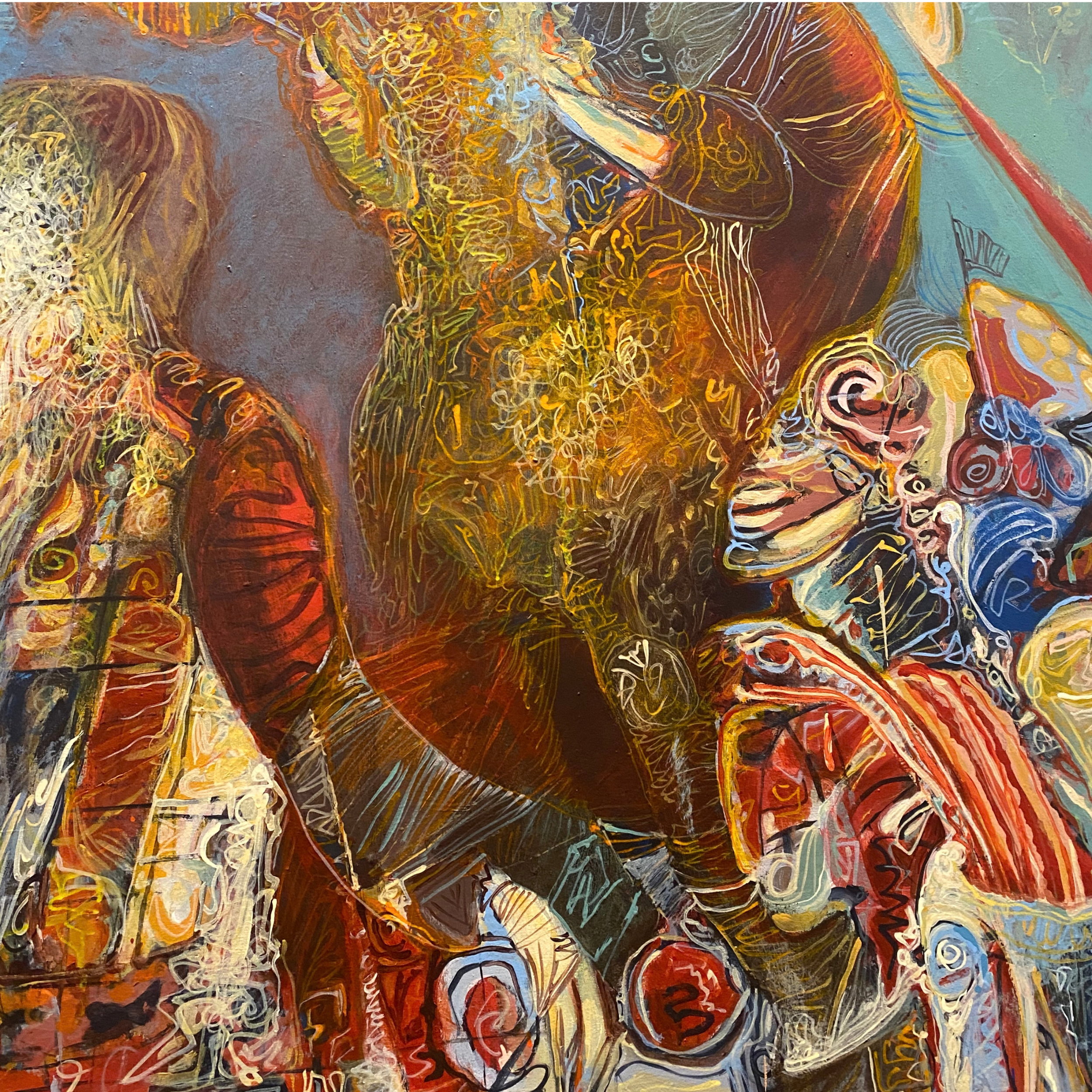
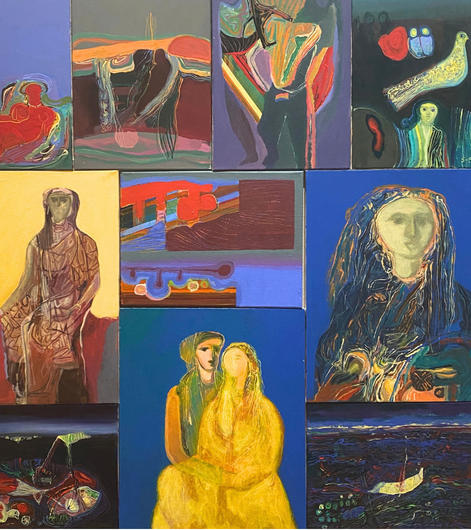
‘A World of Colour and Emotion’ at Leicester Museum and Art Gallery offers an exploration of human experience and heritage, with a particular focus on conflict and tragedy. The exhibition runs from the 15th February to the 29th June 2025 and showcases works spanning the past twenty-five years of the artist’s career. Drawing upon a strong understanding of colour theory, Hashem uses portraits and abstract compositions to contemplate the harsh reality of the ordinary people living in Iraq during the US occupation in 2003, whilst also exploring his own anecdotal experiences through the work.
Hashem uses vibrant colour to elevate figures he feels have been overlooked by historical narratives, alongside those drawn from personal experience.
Walking into the exhibition felt like stepping into the artist’s inner world, a real window into the nature of his heritage and viewpoint. A strong title board stands a short way into the room, framed by placards of information and a couple of the artist’s works.
There is a strong sense of curation behind the placement of the entryway, providing a feeling of breathability and accommodation toward the visitor, allowing them time to learn about the body of work before they journey round the exhibition. The restrained serif typography gives the interpretation an archival tone, setting a contemplative pace before the vibrancy of the retrospective unfolds.
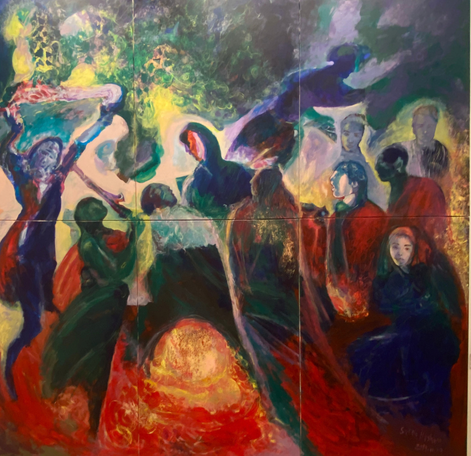
I noticed from early on that there were many expressions of female figures in the works, particularly through the lens of grief, caught up in the thick of political conflict and violence, yet embellished with such incredible abstract colour and detail. These works seemed to reveal the admiration the artist appears to hold for these women - the choice, in essence, brought about their celebration.
The use of colour, shape and composition was quite different from work to work, giving the impression of sub-bodies and studies that existed throughout the full exhibition. These smaller series were characterised by themes of ethereality with soft, blended colour, to figures painted with bold and defined shapes and lines.
Many paintings included fairly recognisable forms, whilst some were completely abstract in nature. But without a doubt, the artist’s objective to use bold, saturated colour intentionally and sentimentally, ran through the entirety of the painted works.
A commemoration of the lives that endured beneath the headlines.
As I moved through the paintings, I became increasingly aware of the sombre tone they seemed to radiate. An impression of collective struggle. An evocation of uncontrollable chaos and the threads of steadfast cultural identity underpinning it. Faces of endurance and an uncomfortable acceptance of reality.
Experiencing the terror together - enduring, not running.
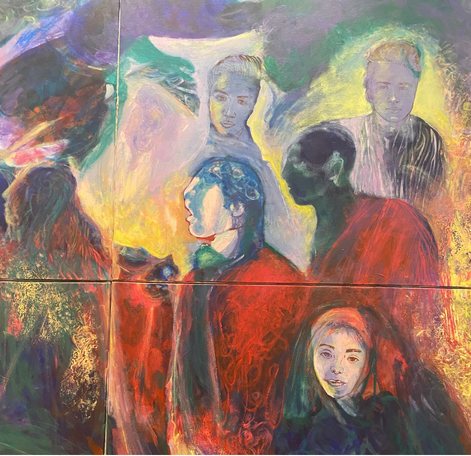
Reflecting over ‘Homage to the victims of Al-Tahrir’, it struck me the compositional similarities that we notice in visuals of war and conflict, whether it be in the media, or in art spaces - the notorious use of the ‘thousand yard stare.’ Visually and artistically, it serves a number of purposes. However, what I experienced by observing the use of it in these works, was the artist’s intent to give an impression of the psychological effect on the figures in the works, alluding to the severity of the circumstances. Also providing that unavoidable connection one can experience when a figure is providing direct eye contact with them.
The technique seems to be deeply effective, adding a sense of interpersonal connection, catalysing deep thought, and possibly inner reflection for the viewer.
As I continued to experience Hashem’s artistic expressions of war and conflict, I wondered if we do enough to commemorate the people who endured life in war-zones. From the conflicts going on in modern-day, we encounter death tolls reduced to numbers in fast-paced news bulletins and notifications. It seems that we don’t have the time to consider those deaths as the people they were, acknowledging them for their lives and doing what we can to support all who were involved.
It seems the cycle of conflict and coverage moves quickly, leaving remarkably little space for acknowledgement or grief.
To conclude, A World of Colour and Emotion left me reflective, offering insight into Hashem’s experiences and the lives that sit behind histories of conflict. What remained with me was the tension between the vibrancy of the work and the realities it contains: colour used not to soften those experiences, but to preserve memory, identity and humanity within them.